

With a staff of only four people, Paws for Purple Hearts (PPH) in Bay Park might be small, but they make an incredibly big impact on the lives of veterans. Paws for Purple Hearts trains dogs to serve veterans and service members for two roles: either in-home with individuals or in-facility as therapy dogs.
Specially bred dogs, primarily Golden Retrievers and Labrador Retrievers, undergo a roughly 2.5-year training program to learn everything from basic skills such as sitting and staying to more complex skills like helping their owner unzip and remove a jacket.
It’s a process that requires a coordinated staff to train the dogs and future dog owners, collaborate with volunteers, fundraise, and spread the word about PPH through in-person events, social media, and marketing.
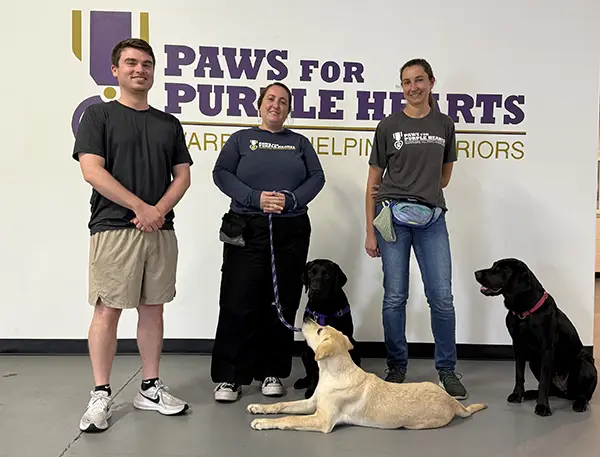
Claire Richardson, Southwest Regional Manager; Selah Marting, Senior Program Instructor; Nicki Einstein, Program Instructor & Puppy Program Coordinator; and Greg DeSantis, Marketing and Communications Specialist, make up the team at PPH Bay Park. Their passion for what they do exudes from each of them the moment they speak about the organization and their work.
“It’s my bucket list job,” said Nicki, who’s been with PPH for the past two years. When the dogs greet you at the facility, it’s easy to see why.
Paws for Purple Hearts launched as a 501(c)3 in 2011. Its national headquarters are in Canyonville, Oregon. Selah opened the San Diego location in 2016.
What Makes Paws for Purple Hearts Different
There are plenty of organizations that train service dogs, but PPH is unique in its association with the Bergin College of Canine Studies. Bergin’s coursework includes not only dog behavior but also hyperspecific courses related to service dog training. Selah is a Bergin graduate.
“I went there for college because I couldn’t imagine going to a ‘normal’ college,” said Selah. “Most of our trainers start by going to Bergin. The same person who started that (college) started PPH,” she said, referring to Dr. Bonnie Bergin, the innovator behind training dogs to be of service to people with mobility limitations.
In addition, PPH enlists veterans and service members to help train their dogs. It’s a program that PPH has coined Canine-Assisted Warrior Therapy, and it’s one of three programs the organization offers.
Paws for Purple Hearts Programs
Canine-Assisted Warrior Therapy (CAWT)
While PPH staff are the primary trainers of its service dogs, their CAWT program incorporates real-life training and interaction with individuals affected by post-traumatic stress disorder (PTSD), traumatic brain injury (TBI), and military sexual trauma (MST). The relationship between the dogs and these individuals is symbiotic, allowing both the dogs and the humans to teach and learn from each other.
“The vets will train them on whatever the dogs are working on,” explained Selah. “It’s a big help for us because the dogs get used to more of what the actual handlers will be like versus us, the trainers. Multiple veterans are a part of their training process throughout the program.”
PPH works with various facilities in San Diego, including military treatment facilities and Veterans Affairs (VA) facilities, to select individuals to participate in CAWT. While many of these veterans love dogs, others are fearful of them. And despite the primary goal of training the dogs to hand off to a fellow service member or veteran, the process is therapeutic for the veteran trainers as well. For the fearful, interacting with the dogs over an extended period of time typically chips away at their fears.
CAWT was born from a master’s thesis at Bergin College, explained Claire. “It was actually a pilot program from a student attending Bergin College. That was basically the start of our organization that we’ve built up at all seven of our sites across the country.”
In-Home Placement
During training, it will be determined whether a dog’s path will be home placement with an individual or facility placement. The dogs that meet the rigorous standards for individual placement will ultimately live with an impacted veteran or service member to help them in their everyday life.
The bar is pretty high, too. Only one out of three dogs qualifies, even after factoring in PPH’s own in-house breeding program designed to produce the most top-tier dogs. Because, after all, they are still just dogs, and some prefer life as a non-working animal.
“Many released dogs are wonderful pets, but a single issue, like door reactivity or discomfort in certain environments, means they’re better suited to a different life,” Selah said. The dogs placed with individuals need to maintain a sense of calm to best serve their owners.
Facility Placement
The dogs that show promise in training but are likely better suited to group therapy become facility dogs. Facility dogs are placed in the care of handlers who bring them to places such as VA medical centers or military hospitals, where the dogs interact with patients, family members, and medical staff.
The dog might rest its head in a patient’s lap or shake its paw with a veteran’s hand, all in hopes of boosting morale and putting a smile on a person’s face. The human-to-animal bond is a formidable one, and it is no more apparent than in a setting such as this.
The Training
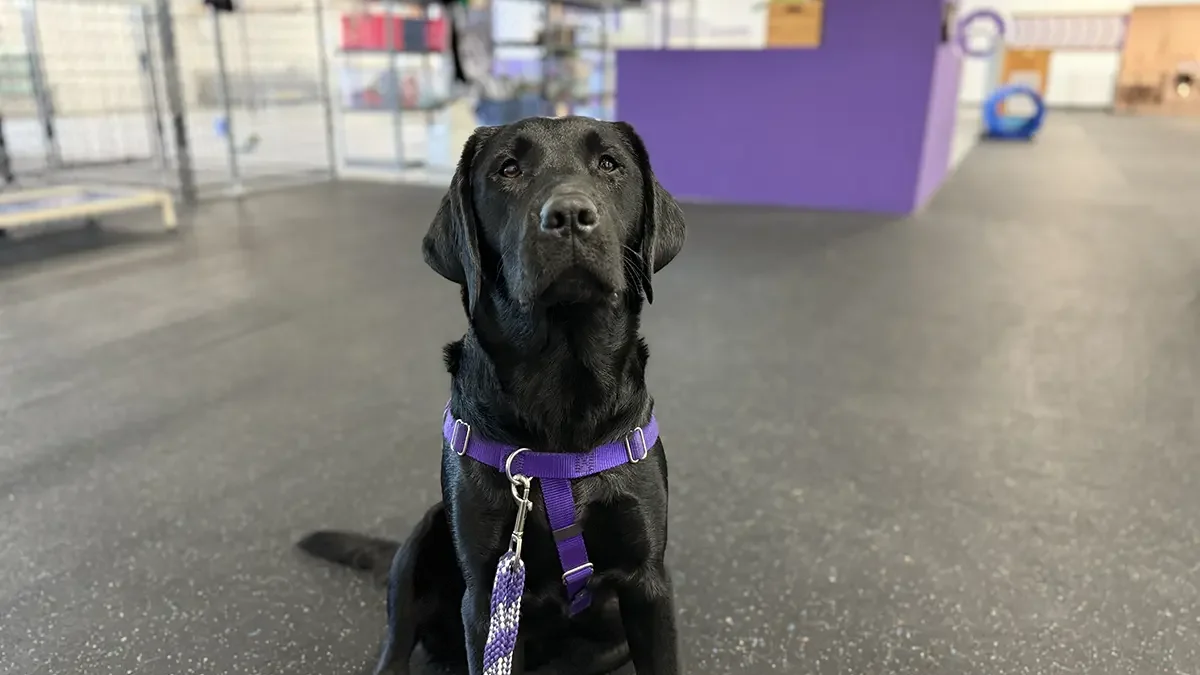
Training a single dog costs between $35,000 and $40,000. To mitigate failure, PPH typically trains Goldens and Labradors, as their natural tendencies make them well-suited to service dog life.
“Any dog can be a service dog, but to give the best chance of success, Labradors and Golden Retrievers excel,” Selah explained. “Goldens are typically soft and people‑loving—great for facility work—while Labs often thrive on tasking.” Natural retrieving instincts, an ideal size, and a friendly public profile make them especially effective ambassadors when out and about.
A standard class size averages six dogs, or three per trainer.
During the multi-year training, the dogs will learn more than 100 commands, ranging from mobility to PTSD. The PPH facility’s training area features multiple real-life scenes, including a dinner table, a bedroom, a living room couch, and even a store counter. In one training scenario, for example, the dog will get its owner’s credit card and hand it to a cashier to pay for goods.
The Puppy Parent program
PPH’s Puppy Parents are the tie that binds. Puppy Parents care for the dogs when they aren’t training, providing them with a stable home environment and the opportunity to socialize in their downtime. Like dropping kids off at school, Puppy Parents bring the dogs to the Bay Park facility Monday through Friday morning and take them home each evening.
PPH provides ongoing support and coaching to Puppy Parents throughout a dog’s training.
How to Apply
There are multiple application options on the PPH website. You can apply for an in-home service dog, a facility dog, or to participate in the CAWT program. There is zero cost to veterans.
There’s even an option to adopt the doggy dropouts deemed unsuitable for home or facility placement, but who would still make incredible pets. These dogs are free to veterans, but must be purchased by others.
After applications are evaluated, PPH does its best to match its dogs with individuals based on that person’s particular needs. The process isn’t linear, meaning applicants aren’t processed on a first-come, first-served basis. It’s more about the right fit between dog and owner.
Personality and lifestyle matter just as much as trained tasks. “If someone thrives on quiet at home, we won’t pair them with a social butterfly who wants to greet everyone,” Claire said.
Once matched, the veteran comes to the facility to train with the dog, learn commands, bond, and prepare for a new life with their soon-to-be-faithful companion.
“I wish we had more dogs,” said Nicki. “There are so many amazing veterans who deserve this. Seeing them light up when they work with the dogs is the best part.”
Get Involved With Paws for Purple Hearts
PPH has many options to get involved with its organization, including:
- Donate: PPH relies entirely on donations and grants, so monetary contributions are always appreciated.
- Volunteer: Help with daily kennel care, enrichment, laundry, and facility tasks, or lend professional skills such as grant writing, fundraising, or event volunteering.
- Become a Puppy Parent: Open your home to a future service dog.
Upcoming Events
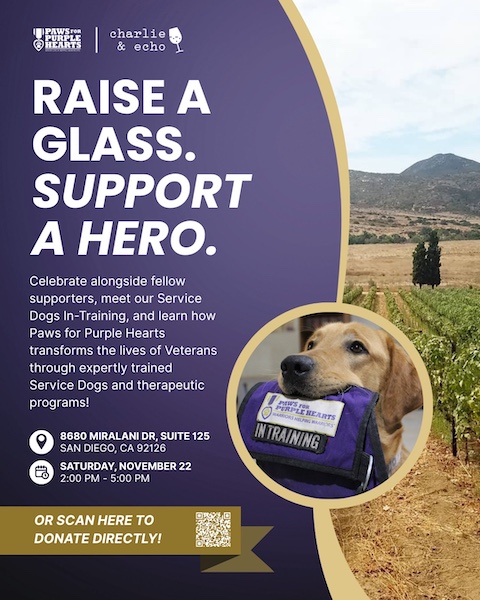
- Fundraiser at Charlie & Echo Winery: On Saturday, November 22, from 2 pm to 5 pm, PPH will be at the winery, where you can meet the staff and the dogs currently in training, and donate to the organization.
- Angel Trees for Dogs: Look for PPH Christmas trees at local mom‑and‑pop pet stores, where if you purchase something to donate, you can take an ornament off the tree.









Fantastic article! I’ve been Ricky’s puppy parent since July 2024. I had no idea how much caring for him and learning how to support Ricky during his service dog training would change my life. As a veteran and current therapist with Marines, I cannot recommend getting involved with P4PH enough. I’m proud to be a small part of Ricky’s journey and the organization. Thank you for highlighting P4PH!
Thats incredible, Amanda! Ricky is one special dog. I’m so glad I got to meet him yesterday, and so glad to hear this program has changed your life. Thank you for your service!
Interesting read, Thanks!
They do some pretty cool stuff!