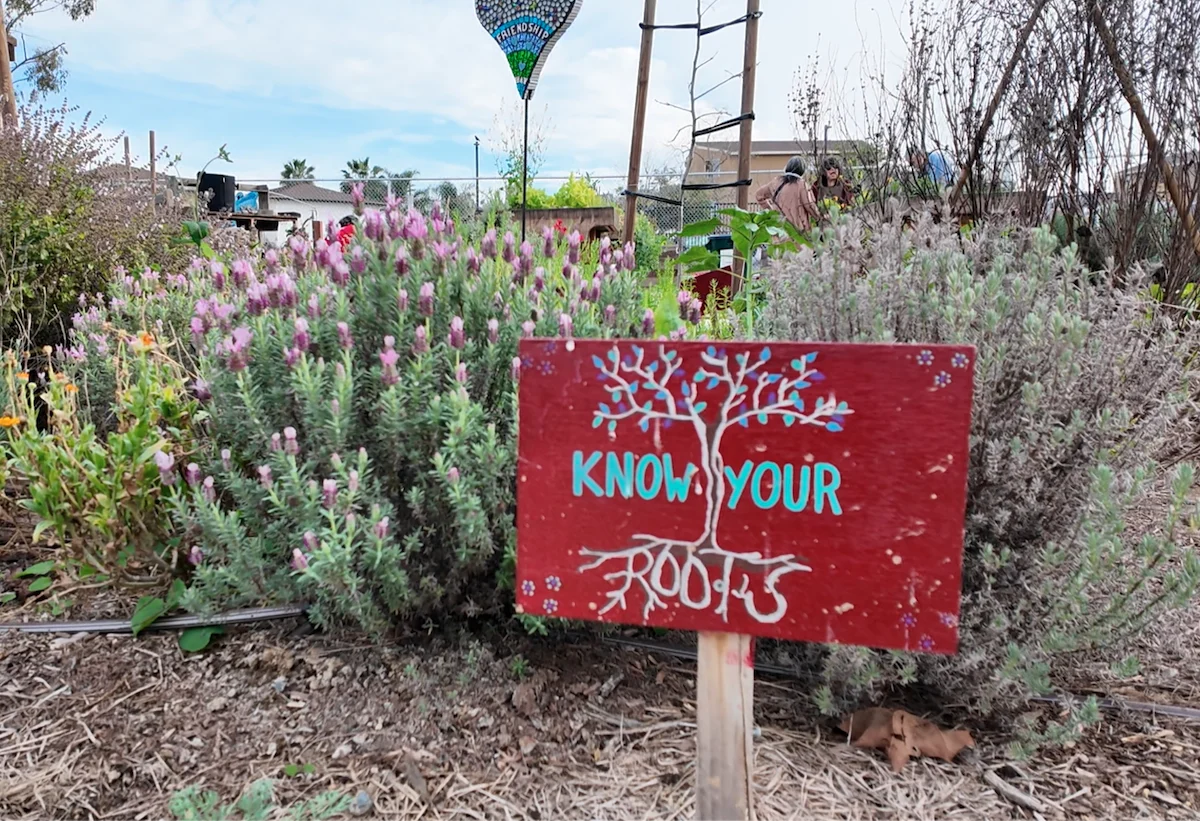

In the middle of a food desert in Linda Vista, a garden blooms. Nestled in a park corner, the Linda Vista Community Garden provides nutrition, education, and a sense of belonging to an often overlooked and underserved community.
The community garden serves people of all ages and abilities, with programs for youth, college students, and seniors. Whether someone wants to learn how to grow their own vegetables or simply doesn’t have access to fresh vegetables, the Linda Vista Community Garden and Bayside Community Center are there to support.
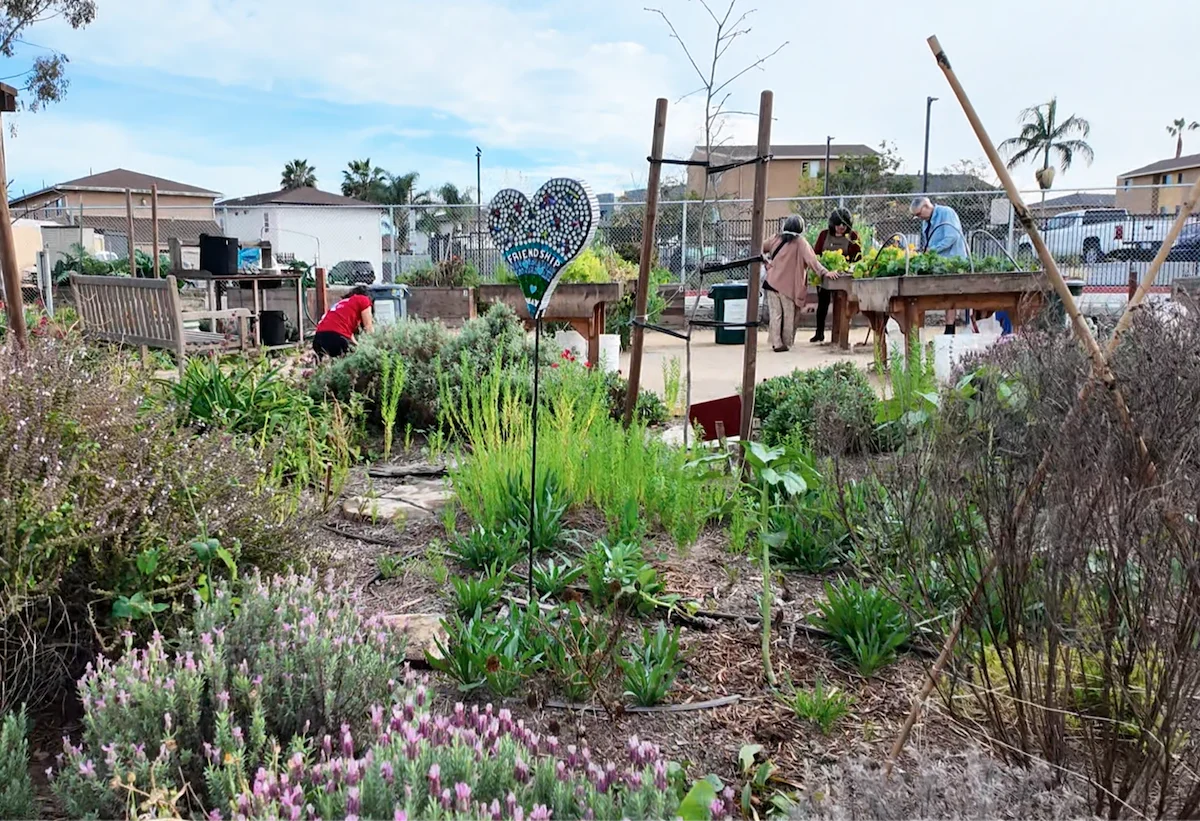
Seventeen raised garden plots surround the garden, and peppered throughout the rest of the space are fruits, vegetables, and herbs in various stages of growth, symbolic of the evolution of the garden itself. In the center of the garden is a learning space with large chalkboards and tree stumps for seats.
Students come here for horticultural therapy and to connect with nature.
The Bayside Connection
Bayside Community Center, a neighborhood nonprofit organization serving Linda Vista, oversees the garden. Bayside’s Executive Director, Kim Heinle, describes how impactful the garden has been on the neighborhood.
“It’s definitely an intergenerational space for sure. You get families, seniors, and middle-aged adults. And then we do a lot of programming with youth. Really, it’s a space for community,” said Kim.
She explained the garden’s programming, including the senior cooperative gardening program, which teaches older adults how to grow their own food, and the middle school program, which helps children process their emotions by working with their hands in the dirt. Rental garden boxes allow residents to create their very own garden within the garden.
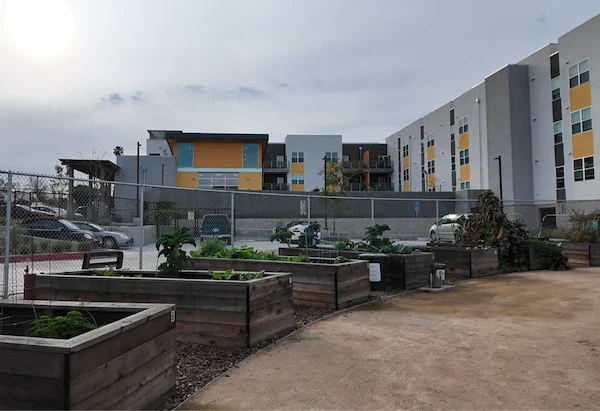
The garden boxes are $12 per month and are reserved for Linda Vista residents, with priority given to those of low or moderate incomes. Because of their popularity, there is currently a waiting list for the boxes.
In addition to being an educational resource, the Linda Vista Community Garden is part of Bayside Community Center’s food distribution services.
“Everything that’s grown here is harvested and given out at our Friday food distributions (other than the renter’s plots),” said Kim. “But there are quite a few renters who grow more than they can consume, so they donate it [to Bayside].”
Bayside donates thousands of pounds of produce to the community each year. Kim explained how volunteers and employees make this happen.
“They’ll harvest produce Friday mornings, rinse it off, clean it, bundle it, and by 1 pm, it’s going out the door to 130+ families. It’s such a nice way to truly dignify the community because so often these folks are getting less than quality food items.”
Gardening as a Learning Tool
Amy Zink, Bayside Environmental Learning Center Associate Director, aka gardener extraordinaire, has played an instrumental part in helping the garden thrive. Her background as an urban farmer and horticultural therapist makes her an ideal community educator.
“You can give people a garden box and all the stuff, but if they don’t have the education around how to grow in this climate and what to grow each month, how to deal with pests, and how to maximize space, it doesn’t matter. That’s where we come in—the education piece,” said Amy.
She continued, “Sometimes it’s classes. Sometimes it’s hands-on one-on-one.”
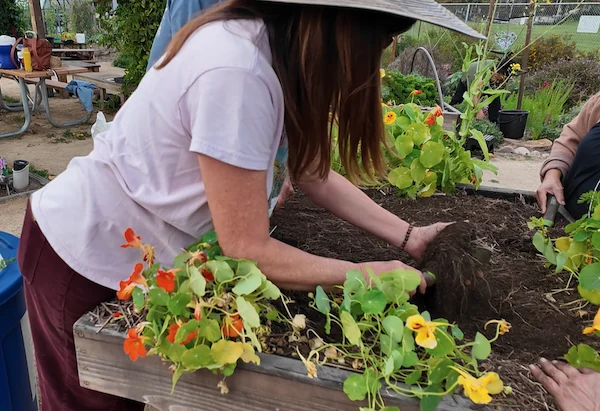
Amy didn’t intentionally seek out what she calls her third career; rather, she fell into it. In 2008, she volunteered at her kids’ school, hoping to encourage the younger generation to garden.
“One day, a mom came up to me and said, ‘Amy, my daughter would never eat salad, and after this school year, she eats it now because she grew it in the garden with you.”
It was all the inspiration Amy needed. “That’s when I knew. I was like, ‘Wow, I’m really onto something here.'” She hasn’t looked back since, educating young and old alike. She dubs herself “the vegetable cheerleader.”
Amy and Kim both reflected on how the garden can change a child’s view of vegetables.
“There’s this one story of this young student who came in and was so mortified to be touching dirt and harvesting things,” said Kim. “And by the end of the day, she was eating fresh carrots right from the ground. Just a smile beaming on her face.”
Amy added with a smile, “I told her where the secret carrot patch was.”
Amy also teaches educators how to spread the benefits of gardening. “We bring classrooms and teachers into the garden and teach them how to use the space for mental health benefits, and how to use that kind of space at their schools.”
A Unique Partnership
The Linda Vista Community Garden marked the first time existing City park space was used for a community garden. This unique partnership between the City of San Diego and Bayside Community Center was uncharted territory, but its success has made it a model for similar projects.
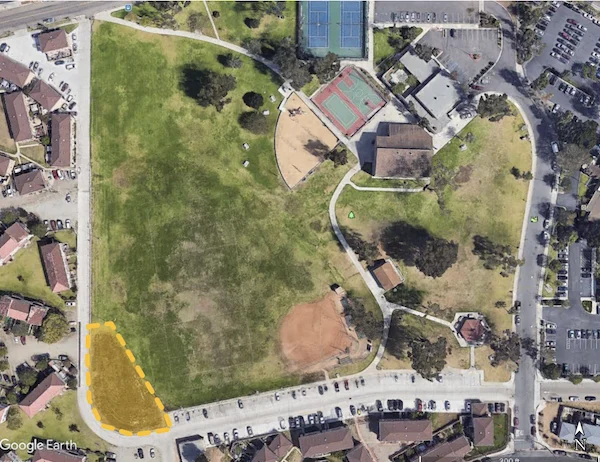
“At the time, it was mostly a dumping ground for clippings and shrubbery, and also a place where people would sometimes throw their garbage,” said Kim. “Through a massive partnership with San Diego Parks Foundation, significant grant funding, and individual donor funding, the garden broke ground in 2023 and opened in 2024.”
The garden’s success has made its creators de facto consultants for others looking to add a similar garden to their communities. Bayside Community Center is currently offering its Community Garden Workship Series to members of the public who want to spearhead their own projects.
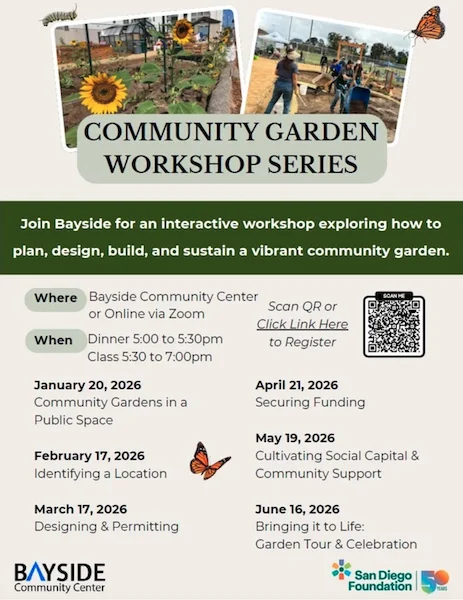
The workshop covers everything from identifying a location, securing funding, designing and permitting, and generating community support. Interested parties can attend all the workshop sessions or only the ones that interest them. The workshop is offered in person or online, but Amy recommends attending in person for the best experience.
“What we’re not doing [for this workshop] is teaching people how to grow a carrot,” said Amy. “This is more about the bureaucratic systems, the fundraising, the social capital, and the permitting. It’s helping folks navigate the system of building a community garden in the City of San Diego.”
For the Community, Open to All
While the plots in the Linda Vista Community Garden are available only to residents, the garden is open to anyone interested in learning about gardening or volunteering.
Join in on one of the regular classes:
What: Seed Starting
When: Third Friday of every month from 12:30 pm to 1:30 pm
Where: Linda Vista Community Garden, 7064 Levant Street, in Linda Vista
If you’re interested in volunteering, reach out to Amy at azink@baysidecc.org or 858-278-0771.
Other community gardens in the area include: