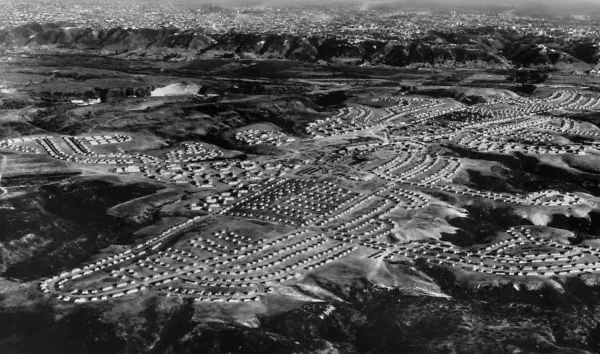

Linda Vista has always been a scrappy neighborhood, fighting to avoid being overlooked, with fiercely loyal residents leading the charge to protect their home turf. One of Linda Vista’s earliest scrappy residents was a woman who fought the pending evictions of Linda Vista’s public housing residents and led the way for them to become proud homeowners instead.
A neighborhood of small homes and big dreams
Besides being a Linda Vista resident, Margaret Hottell was the editor and founder of the local newspaper, the Linda Vista Reflector. In 1952, she used it as the platform for her movement to keep her neighbors, who were military and defense workers, in the homes they’d lived in for a decade. The Defense Housing Act of 1951 had recently passed, allowing the enforcement of certain guidelines that were squeezing residents like the Hottells out of their homes.
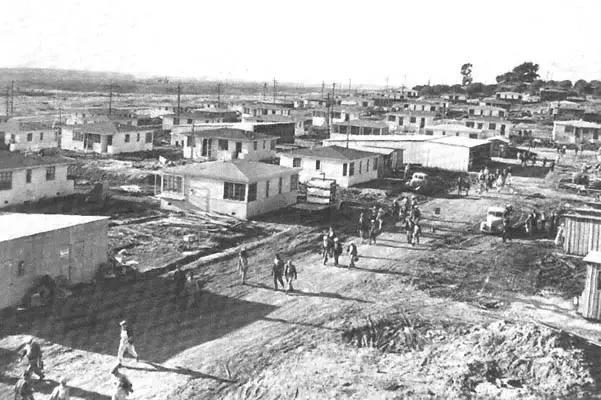
Housing in Linda Vista was erected at a fever pace in the early 1940s. Despite the City of San Diego’s objections, the federal government pushed forward, building thousands of homes as World War II raged on. San Diego’s population had exploded 67% from 1939 to 1945, and military families and employees of local defense companies desperately needed homes. The federal government chose Linda Vista because the land was cheap, vacant, and easy to acquire. The Linda Vista Housing Project became the largest low-income defense housing project in the world.
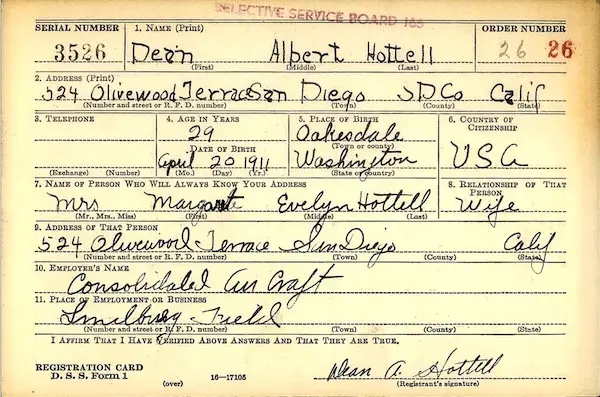
Margaret and her husband, Dean, moved from Everson, Washington to San Diego in 1940 so her husband could find work. Dean pivoted from farming to working in the aircraft industry for Consolidated Aircraft, which later became Convair, at Lindbergh Field. The Hottells initially lived in working-class Southeast San Diego, before moving into one of the homes in Linda Vista’s housing project. The commute was long, the neighborhood dusty, but they had a home for their family.
The push to privatize public housing
The rapidly built homes in Linda Vista were never meant to stay public housing. The Lanham Act of 1940, which funded the project, stated that it was to eventually be sold at full market value, categorically barring the housing from becoming subsidized housing, noting, “said housing or any part thereof shall not, unless specifically authorized by Congress, be conveyed to any public or private agency organized for slum clearance or to provide subsidized housing for persons of low income.”
This gave hope to many families who moved to Linda Vista during the war. Working at local defense companies meant a chance to earn a decent living, especially through overtime, raises, and promotions. Families like the Hottells felt homeownership was in reach for an otherwise working-class family that usually felt left behind.
Their success became their Kryptonite in May 1952, when the federal Public Housing Administration announced it would start enforcing income limits, pushing out families who earned too much. Residents blamed the Defense Housing Act of 1951 and petitioned Congress to repeal it.
On paper, the Housing Act seemed benevolent and meant to provide a pathway to homeownership for military veterans. In reality, the policy gave newly arriving ‘in-migrants,’ many of whom were veterans themselves, priority to buy the very homes where local defense families lived, leaving civilian workers who had sustained the country’s military efforts during wartime facing eviction. In-migrants were war workers and their families moving into San Diego, often from out of state, and who needed housing.
The irony wasn’t missed. The families being pushed out were one-time in-migrants who were being pushed out for succeeding.
A different kind of war
Margaret began her fight by using her newspaper to disseminate information to the community. On May 22, 1952, the Linda Vista Reflector ran a story with the headline, “Income Limits Set for Occupants.” She continued writing stories on the impending evictions. Another article was headlined, “Calling Organizations and Individuals Who are Affected by Housing Eviction Notices.”
The July 17 issue carried both the announcement of the newly formed Civic Housing Committee, and a reprint of the petition against the evictions. Margaret and another Linda Vista resident and Navy wife, Jenny Starren, formed the CHC to lobby Congressional candidate Bob Wilson to bypass Public Housing Administration rules. They wanted the right to buy the homes they’d lived in for over a decade.
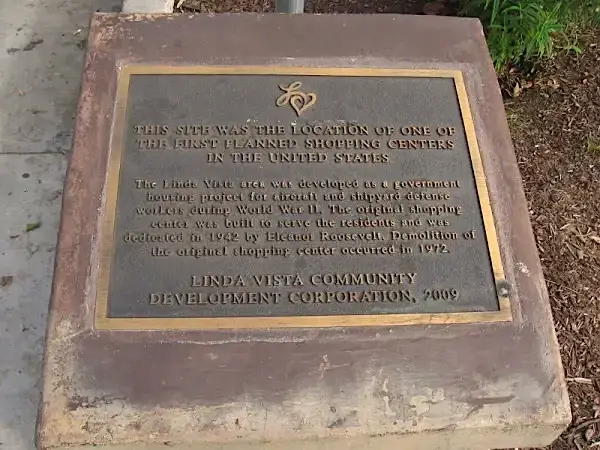
Margaret and Jenny held CHC meetings in the Linda Vista Tenant Activity Building (now Skateworld). Despite a supposedly angry community, the meetings drew fewer attendees than the women had hoped. Still, they pressed on, continuing to leverage their relationship with Bob Wilson, who was elected to Congress in November of 1952.
The persistence worked. In October of 1953, Margaret published the story she had been waiting for, “Eviction Program Halted.”
[Side note: The community building was built by the federal government in 1943, and the government wanted to sell it in 1951. The neighborhood fought to keep it, and won. In 2019, a sale that would have put a mini-Target in the building was blocked. Today, the City of San Diego is proposing putting affordable housing on the site.]
The first Linda Vista housing project home sold in 1954
Two years after Margaret Hottell’s newspaper warned Linda Vista residents they could lose their homes, those same families began buying them. The first person to buy a home was Harold Langston, reported in the Linda Vista Reflector on October 28, 1954. Harold, a Navy veteran, and his wife, Velma, had rented in Linda Vista for nine years.
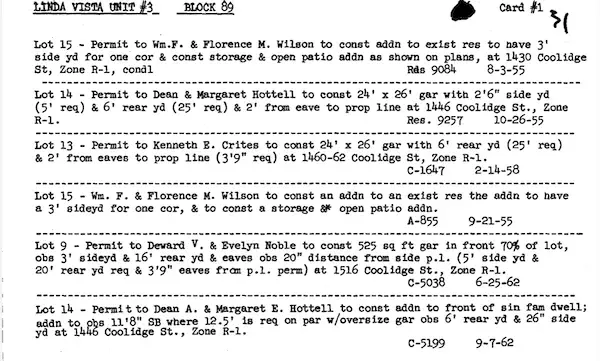
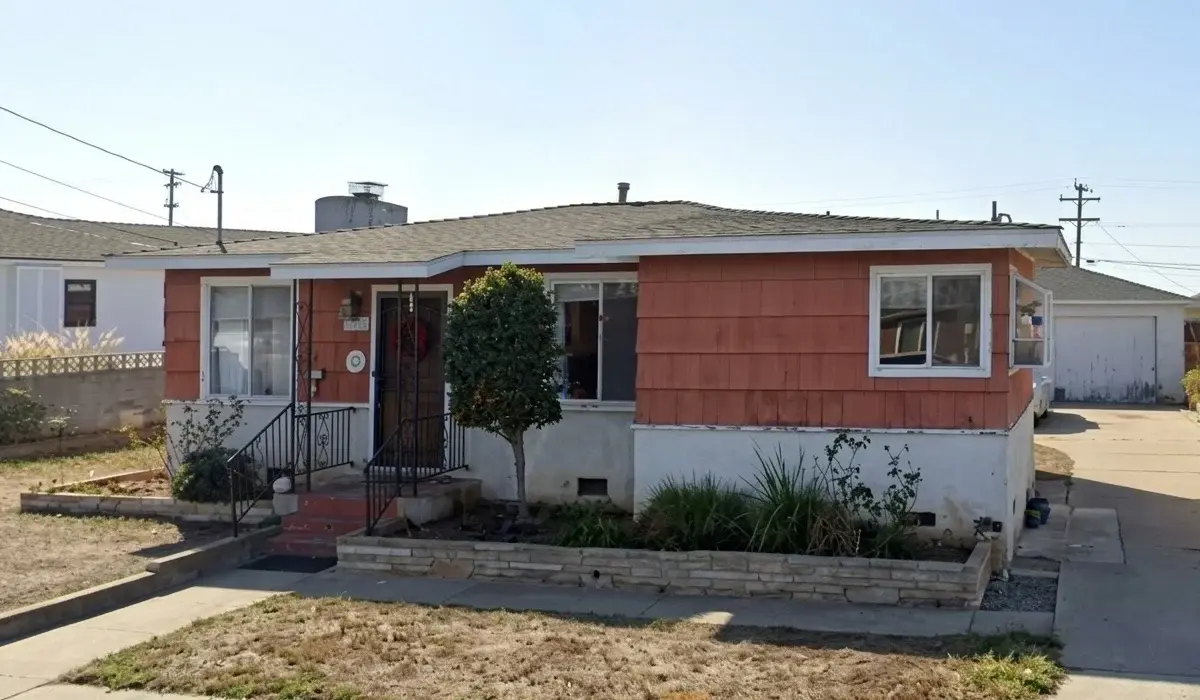
The Hottells appear to have followed soon after. City permit records show Dean and Margaret applying in October 1955 to expand their home at 1446 Coolidge Street, suggesting that the temporary wartime house they had fought to remain in had finally become theirs.
The unexpected twist that broke barriers for minorities
In the 1940s and 1950s, San Diego neighborhoods were still very racially divided. Racial covenants were written into the deeds of many homes, barring minorities from purchasing homes outside of certain designated areas, like Logan Heights and Southeast San Diego. Coincidentally, this is where the Hottells, who were white, first moved when they came to California.
Even if the covenants weren’t on every San Diego home deed, minorities still had trouble finding lenders or real estate agents willing to work with them.
In Linda Vista, roughly 600 housing units were set aside for black war workers. After Hottell successfully petitioned to stop the evictions and workers who already lived in public housing were given the opportunity to buy in Linda Vista, this opened the door for minorities as well. Because this was a federal housing project, no developer covenants restricted sales to minorities.
In the years since, Linda Vista has continued to evolve as a large minority community, with a significant Asian influx in the 1970s.
Get stories like this one, straight to your inbox.
Plus local events, deals, and what's opening and closing around the neighborhood.
Join more than 3,000 of your neighbors who get our free weekly newsletter.
Linda Vista was a neighborhood built in a hurry, for a war, by a government that never intended to keep it. Margaret Hottell and her neighbors had other plans. Today, it’s one of San Diego’s most racially integrated neighborhoods.

Sources
Ryan Reft, The Metropolitan Military: Navy Families and Housing in the American Sunbelt, 1941–2000 (PhD dissertation, UC San Diego, 2014), Chapter One — https://escholarship.org/uc/item/0p81w7pt
Ryan Reft, “The Privatization of Military Family Housing in Linda Vista, 1944–1956,” California History, Vol. 92, No. 1 (2015) — https://online.ucpress.edu/ch/article-abstract/92/1/53/33426/The-Privatization-of-Military-Family-Housing-in
Christine Killory, “Temporary Suburbs: The Lost Opportunity of San Diego’s National Defense Housing Projects,” Journal of San Diego History, Spring 1993 — https://sandiegohistory.org/journal/1993/january/suburbs/
“Boomerang Boom: San Diego 1941–1942,” Journal of San Diego History, January 1982 — https://sandiegohistory.org/journal/1982/january/boom/
Lanham Act disposal provisions, 42 U.S.C. § 1524 — https://uscode.house.gov/view.xhtml?req=granuleid:USC-prelim-title42-section1524&num=0&edition=prelim
Wendy L. Tinsley Becker, Urbana Preservation & Planning, Historical Resource Analysis: Linda Vista Housing Project Tenant Activity Building, 6907 Linda Vista Road, prepared for the City of San Diego, September 2010 — https://www.sandiego.gov/sites/default/files/legacy/redevelopment-agency/pdf/lindavista/lvtenantactbldghrar.pdf
City of San Diego, Linda Vista Community Plan: Planning Context — https://www.sandiego.gov/sites/default/files/legacy/planning/community/profiles/lindavista/pdf/cp/lvcpplngcntxt.pdf
“How discriminatory covenants shaped San Diego homeownership,” KPBS, November 17, 2021 — https://www.kpbs.org/news/local/2021/11/17/how-discriminatory-covenants-shaped-san-diego-homeownership
City of San Diego, Affordable Home Development Master Plan — https://www.sandiego.gov/planning/work/affordable-home-development-master-plan
Dean Albert Hottell, World War II draft registration card, October 16, 1940, Local Board No. 165, San Diego County
City of San Diego building permit records, Linda Vista Unit No. 3, Block 89
San Diego County Assessor/Recorder/County Clerk, official records













Thank you, Tanja for such an interesting article on the history and transformation of Linda Vista. As an active-duty military family, it’s especially meaningful to see how the neighborhood’s past and present have come full circle, while continuing to reflect its deep connection to such culture and diversity! We love our home and our neighbors!
It was fascinating to research. I was up until almost midnight writing it, so I need to go back and check for errors since I was so tired! I also found out much of the documentation and records are available at an SDSU archive library, so I’m going to schedule a visit and check it out.
The story of Linda Vista is an important part of San Diego history. I hope the residents continue to fight for the respect they deserve and the preservation of Skateworld.
Oh my gosh, they have tried to take that building down so many times and it’s such an important part of Linda Vista’s history. I so hope it survives.
This is a very fascinating and important story, but what does it have to do with Clairemont? I see the same thing happening in the “Clairemont History” and “You Know You’re from Clairemont” Facebook Groups. The former had a post complaining about getting charged different amounts for packaged sunflower seeds at a gas station, while the other has had a run on the various aircraft and aircraft crashes associated with the Miramar air station. Again, I enjoy reading about the history of the surrounding area (I’ve even contributed several posts), but if you’re going to drift outside of the neighborhood, the title of this post should reflect that.
Hi Alex–all over this website it says the neighborhoods it covers, which includes Clairemont, Bay Park, Bay Ho, Linda Vista, Kearny Mesa, and Serra Mesa. I understand it’s called Explore Clairemont, but it has evolved to cover close neighborhoods as well. I apologize for any confusion.
Linda Vista was built first. Born in ’49 and growing up in Linda Vista, I watched (and heard!) Clairemont and other surrounding communities being built. I still remember the incessant sounds of the bulldozers.
Such a wonderful article Tanja. Thanks for sharing. I also saw this in the OB Rag as well. Great work!
Glad you enjoyed it, my friend.
Thank you, Ms. Kropf, for a wonderful and interesting article! I am the son of Jenny Starren, who, as you noted, worked with Ms. Hottell on community affairs. I heard her name growing up, and met the Hottells a few times. They lived just down the street from us. Mom told me how some residents nearly derailed the effort to save everyone’s homes by protesting the presence of Black families, not grasping that that could get them thrown out too, as real estate investors were keen to grab the properties. She also related how one day a woman walked right into our house, looking around. When Mom asked her what she wanted, she replied “Oh, don’t mind me. I’m just inspecting my house.” Mom told her it wasn’t her house yet, so “Get out!”
Wow! I’m so happy you commented. That’s an amazing tidbit. From what I read, it sounds like your mom and Margaret Hottell were feisty women who didn’t let anyone push them around. I love it. I could’ve written so much more and plan to go to the archive library at SDSU to pull up some of the actual documents you can’t find online. I’d love to touch base if I do any follow-up.