The next time you’re at Hickman Youth Athletic Complex in Kearny Mesa watching a soccer or baseball game, take a minute to walk over to the flagpole. At its base, you will notice a small bronze plaque with an inscription:
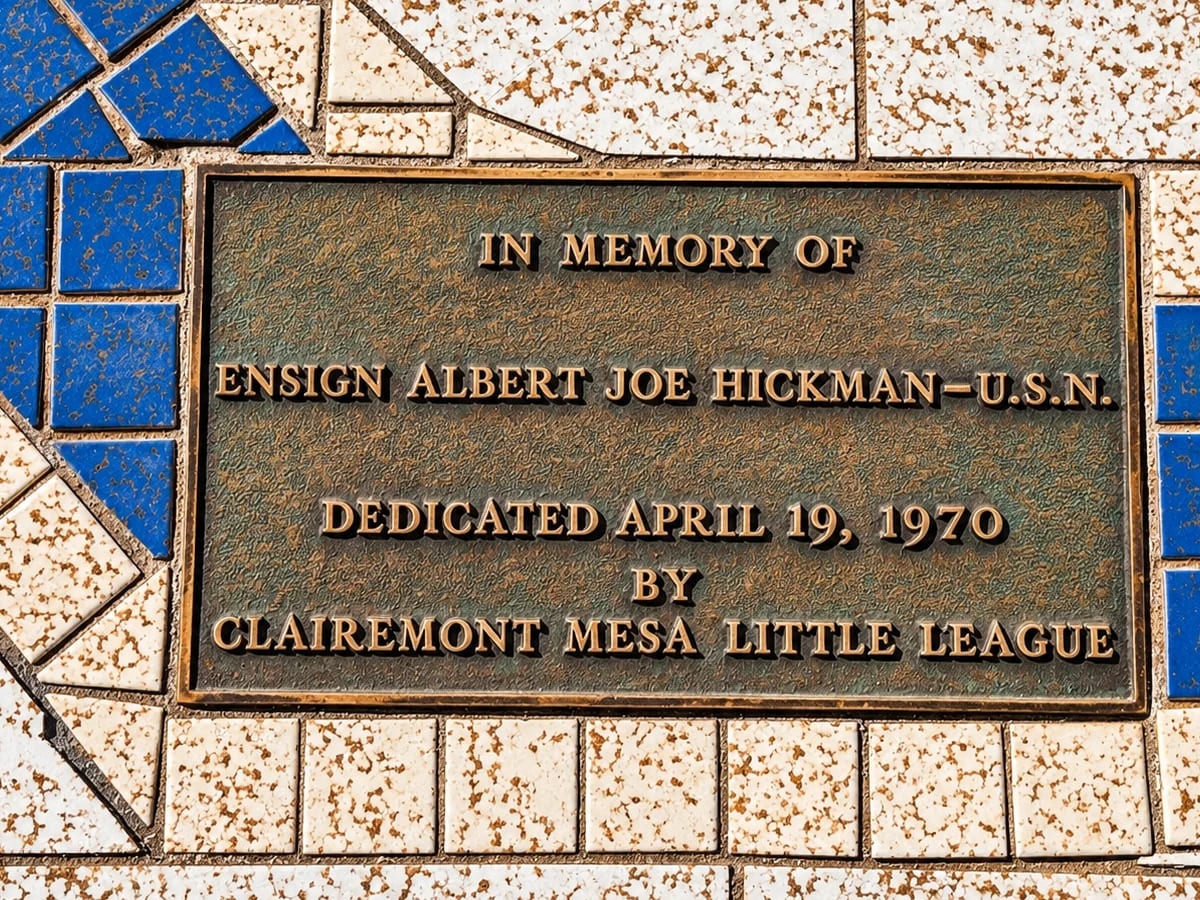
Sadly, no other information is available about why the complex was dedicated to Ensign Albert Joseph Hickman’s memory. This article aims to rectify that.

Run a local business? Need help growing?
Young Navy pilot’s flight gone wrong
Ensign Hickman was a 21-year-old naval aviator attached to Fighter Squadron VF-121 in San Diego when, on Friday, December 4, 1959, he and his wingman, 22-year-old Ensign Allan G. Anderson, were returning to Miramar Naval Air Station after practicing carrier touch-and-go landings.
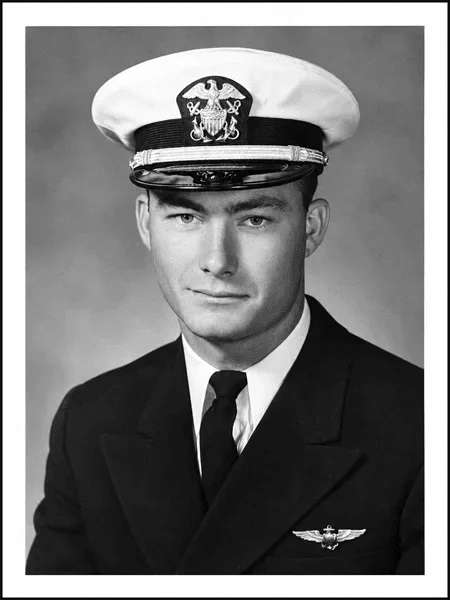
After conducting a sharp 60-degree left turn at about 1,500 feet altitude just north of San Clemente Canyon, Ensign Hickman, who had failed to wear his G-suit that day, momentarily blacked out.
During that time, according to his wingman, the single jet engine of Ensign Hickman’s McDonnell F3H-N Demon jet “flamed out” or shut down, causing it to drop precipitously.
When he came to, Ensign Hickman immediately realized he was in trouble. His powerless jet was heading nose-down at about 300 mph straight toward a Clairemont schoolyard crowded with children during their noon lunch recess.

A near miss at a Clairemont elementary school
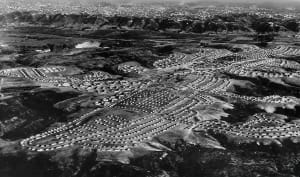
Located south of San Clemente Canyon, the Nathaniel Hawthorne Elementary School is about three miles southwest of Miramar Naval Air Station. As a result, jet aircraft flying north of the canyon were a daily occurrence. However, they are banned from flying over the two-year-old school or the newly developed Clairemont Mesa North subdivision beyond.
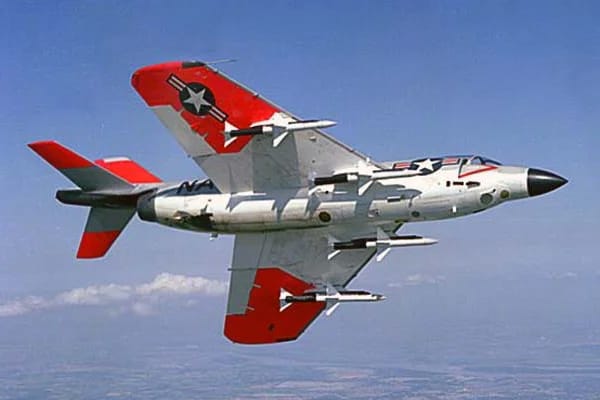
This time, however, hundreds of young children and their teachers were horrified to see a white swept-wing Navy jet with orange-painted wingtips and tail section flying straight toward them.
Navy pilot’s split decision takes his life while sparing hundreds
With split seconds to spare, Ensign Hickman had to decide: bail out and live, or fly his aircraft away from the school and the surrounding neighborhood. He chose the latter.
Eyewitnesses reported seeing Hickman “sort of half-standing in the [open] cockpit . . . waving frantically for youngsters to get back as his fighter zoomed 60 feet over our heads.”
They stood fixated as, according to one teacher, “He turned on his afterburner” as the jet curved and flew over the schoolyard’s north perimeter fence.
Another eyewitness said the jet’s tail (probably its arresting hook) snagged and tore off the fence’s northeast corner before flying out of sight to the northeast.
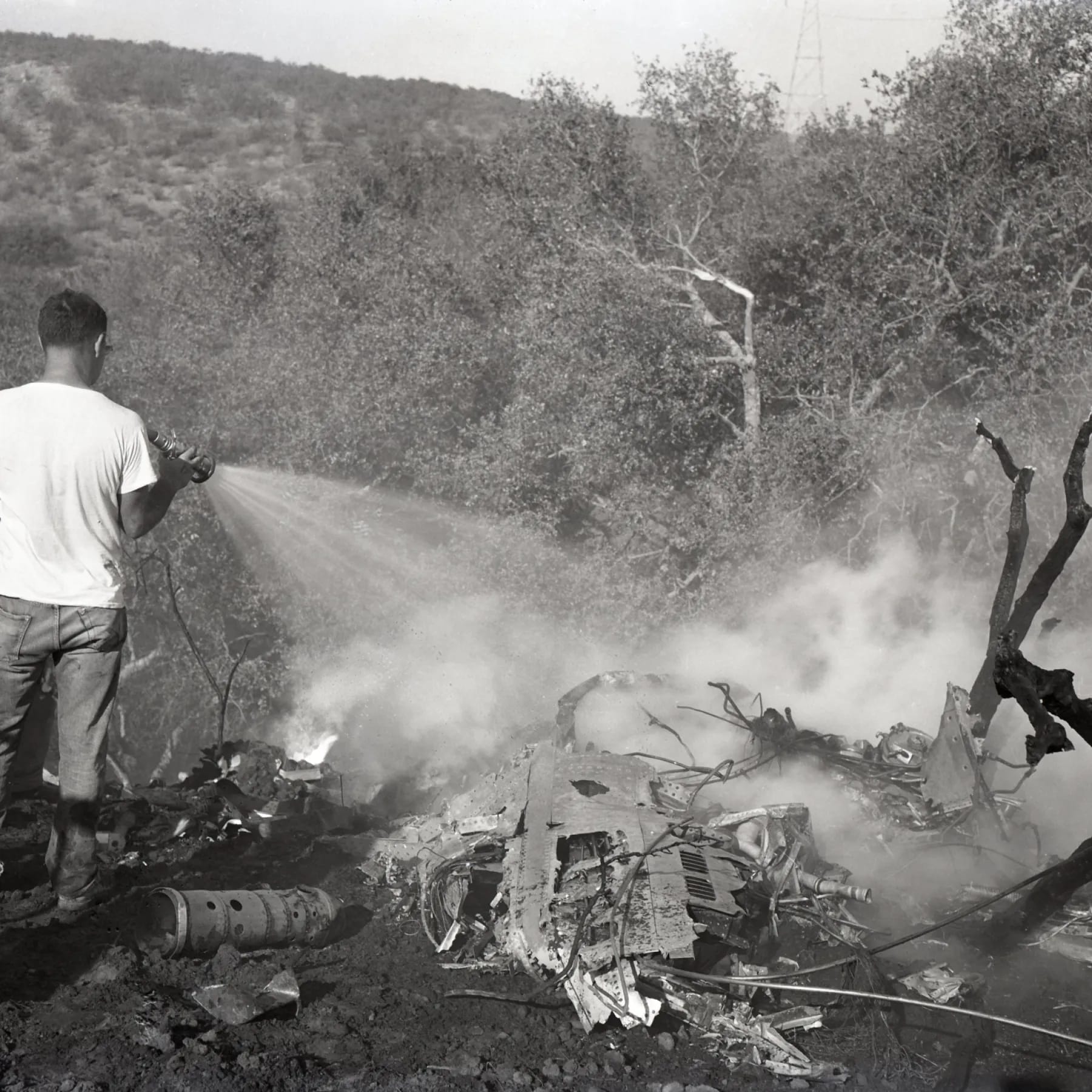
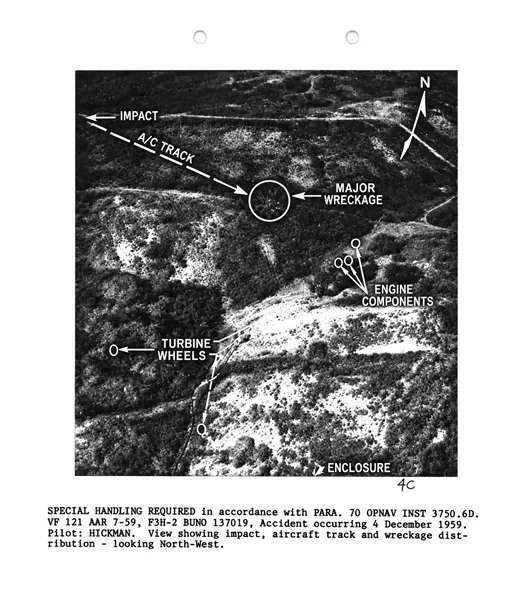
Ensign Anderson watched helplessly as Hickman’s jet flew another 220 yards before its left wing banked and struck a hillock, exploded, and cartwheeled in flames over and into the hillside of a steep drainage east of what is now Diane Avenue.
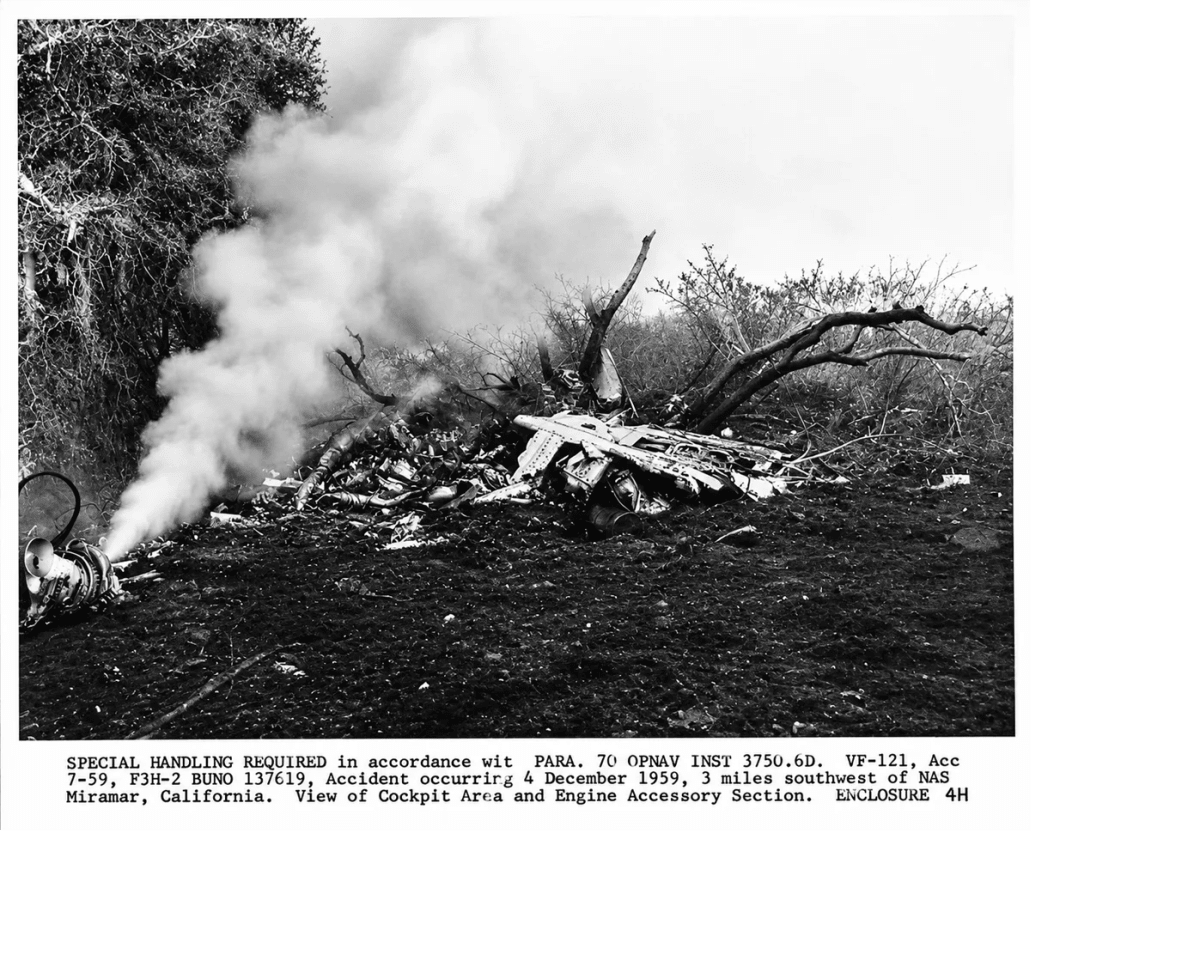
Many students standing in stunned silence began to cry hysterically as they felt and heard the secondary explosion, followed by a big black cloud of rising smoke.
As their teachers led them back into their classrooms, they soon heard sirens as multiple naval and city fire engines sped toward the crash site to deal with three separate brush fires over about 20 acres.
Get stories like this one, straight to your inbox.
Plus local events, deals, and what's opening and closing around the neighborhood.
Join more than 3,000 of your neighbors who get our free weekly newsletter.
Recovery efforts ensue in San Clemente Canyon
One advantage of the fires was the relatively easy access to and recovery of Ensign Hickman’s remains resting about 300 yards downslope of the secondary impact point.
Although the Navy’s official January 12, 1960 Aircraft Accident Report was highly critical of Hickman’s performance, particularly his choosing not to wear a G-suit, it concluded that, “There is evidence that the pilot was attempting to avoid a crowded schoolyard and residential area immediately prior to impact.”
Ensign Hickman honored in death
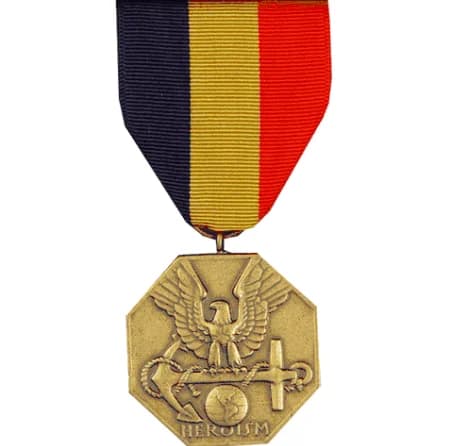
Consequently, the Navy posthumously awarded Ensign Hickman the Navy-Marine Corps Medal. Established in 1942, the medal remains the premier non-combat heroism award for Navy and Marine Corps service members.
That’s why his name appears on a small bronze memorial plaque at Kearny Mesa’s Hickman Youth Athletic Complex, as well as the namesake of the nearby American Legion Post No. 460, a Mira Mesa elementary school, and a Mount Soledad Memorial Park plaque.
Join author on educational walk to Ensign Hickman crash site
On Saturday, December 5, 67 years and a day after Ensign Hickman’s heroic sacrifice, author Alex D. Bevil will lead a short walk to view locations associated with the Ensign Hickman crash site. Hopefully, some former Hawthorne Elementary School students who witnessed that tragic event will attend.
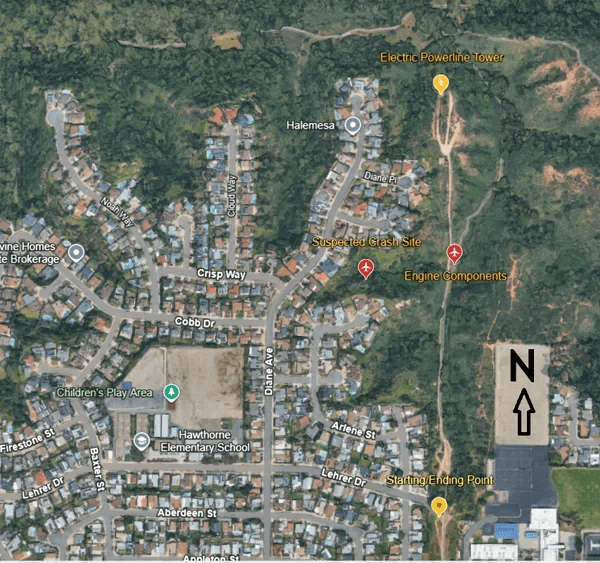
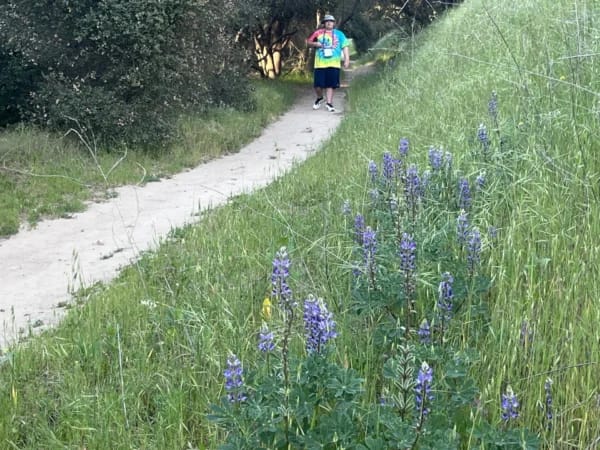
Starting at 10 am from the end of Lehrer Drive, east of Dawne Street, Alex will give a brief overview of the crash. Then he will lead a walk down a paved dirt service road for about a ¼ mile to a trail junction. From there, he will point out the crash site’s location, as noted in the Navy 1960 Accident Report. After a short pause to reflect on how many people would not be alive today if not for Ens. Hickman’s sacrifice, he’ll head back up to reach the starting point by noon.
A retired California State Parks historian, Alex has done extensive research, written reports, award-winning articles, and given presentations on several historic military and civilian aircraft crash sites, including the tragic 1978 PSA jet crash in North Park. He hopes these walks, along with articles and presentations, will increase the general public’s awareness of the historical importance of Clairemont’s local hero.
Sign up to join the free educational walk.
For more information: text Alex at 858-692-6212