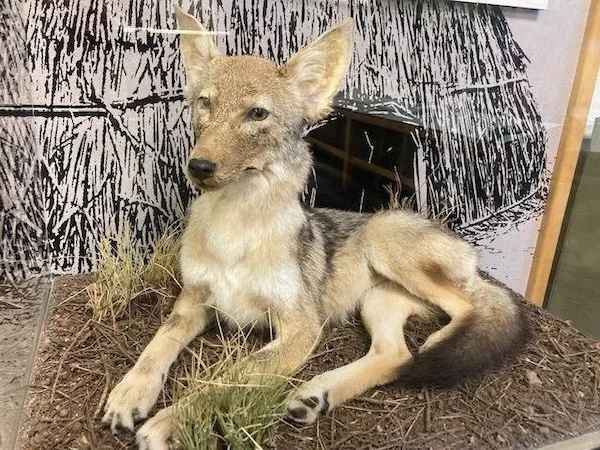

The first time I saw a coyote, I was about 12 years old. It was early on a Sunday morning, with a hint of misty fog in the air. I was delivering the San Diego Tribune (back when there were separate morning and evening paper routes, except for Sunday mornings). Through the fog, I saw what I thought was a dog, and when I realized it wasn’t, I felt a slight panic. I locked eyes with a coyote and watched as he (or she) gracefully sauntered by.
Once my panic subsided, I remember thinking how cool it was to witness what I had just seen. While coyotes are prevalent in San Diego, they aren’t actually seen that often. Although the more we encroach on their habitat, the more we contribute to their proliferation in urban and suburban areas, but not for the reasons you might think.
The Urban Coyote is Quite Crafty
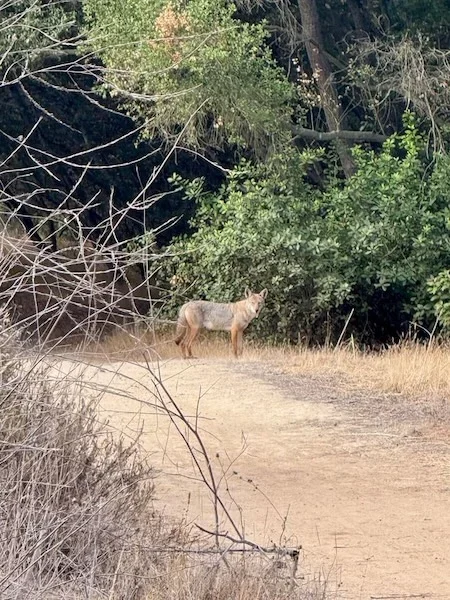
Coyotes, by nature, are quick to adapt. A bit wily, if you will. Hence, the play on words for the famous Looney Tunes character, Wile E. Coyote. Extermination was once a method of population management for coyotes, but coyotes, wily as they are, figured out a way to beat the system.
Attempting to eradicate coyotes actually increases their population. It’s called the “rebound effect.” Once they face extermination, coyotes will start breeding earlier and having larger litters. It’s part of their DNA. If coyotes stop hearing the regular yipping and howling of their fellow coyotes, the silence sets off a biological cascade. Females, who only ovulate once per year, will automatically release more eggs to help the species regenerate and survive. Litter sizes will increase from an average of about 4 pups to 8 pups.
Once coyotes rebuild their population, their litter sizes drop back to normal. It’s the ultimate in survival of the species, and makes coyotes one of Mother Nature’s most resilient animals.
The Ultimate Survivor-Outlive, Outplay, Outlast
This is why urbanization is no match for the coyote. In fact, the urban coyote has adapted to its environment so expeditiously that it is thriving. It outlives its rural counterpart by more than a decade, surviving up to 15 years. Urban and suburban environments are a virtual smorgasbord for coyotes, who are natural scavengers. Rodents scurrying near garbage cans, rabbits hopping across lawns, fallen fruit from trees in the yard, pet food left outside, and yes, even small pets in the backyard make for a veritable feast for this creature of the night.
Urban coyotes, unlike their rural counterpart, are nocturnal creatures. While humans are sleeping is the perfect time for them to hunt. During the day, coyotes try to stay out of humans’ way, sleeping nestled in brush or hidden in open park spaces, or perhaps under a deck. You might even see one at a golf course. My most recent sighting of a coyote was during the day at a golf course in North County.
Coyotes that live in urban and suburban neighborhoods are also quieter than their country kin, keeping their yips and howls to lower decibels, like keeping the music down in your urban apartment so the neighbor won’t complain. They don’t want to create too much of a raucous and unsettle the humans around them, so they’ve learned to adapt to a quieter tone.
Should You Be Scared of Coyote Attacks

Despite much media hoopla, coyote attacks are actually quite rare. Coyotes would prefer to go on living their best lives without having to interact directly with humans. But since we now share much of the same space, human-coyote encounters are sometimes inevitable.
Get stories like this one, straight to your inbox.
Plus local events, deals, and what's opening and closing around the neighborhood.
Join more than 3,000 of your neighbors who get our free weekly newsletter.







How to Handle a Coyote Encounter
If you’re walking the trails of Tecolote Canyon or Sandrock Canyon, or even the streets of Linda Vista, and you happen to encounter a coyote, don’t panic. Take part in hazing, which is designed to reinstill the fear of humans in coyotes. Here’s what to do:
- If you’re with a small dog or small child, pick them up
- Make eye contact
- If you’re alone (without dog or pet), walk toward the coyote to scare it away
- Make yourself bigger, e.g., wave your hands to your sides
- Be loud-yell, clap, stomp your feet
How To Protect Pets From Coyotes
A Labrador retriever, while only slightly taller, is nearly double the weight of San Diego’s coyote subspecies, the Canis latrans clepticus. This variant typically weighs between 15 and 35 pounds. While coyotes don’t typically attack larger dogs, it does happen on occasion. Coyotes are very territorial, and if they feel threatened, they might attack.
If you have a smaller dog, it is much easier prey for coyotes and, therefore, more vulnerable to attack. Regardless of your dog’s size, always keep it on a leash, especially on canyon trails. If you encounter a coyote while with your small dog, pick it up. If you have a larger dog, shorten the leash to prevent it from lunging. Keep an air horn and/or bear spray with you to scare coyotes away.
If you have a cat or bunnies, leave them indoors, particularly at night when coyotes typically hunt for prey. Keep pet food inside or in containers inaccessible to coyotes.
Coyotes are actually very valuable to our ecosystem and keep the rodent and rabbit populations from proliferating. These highly intelligent, cunning animals roamed this region of San Diego long before we did, and they are an integral part of what makes our wildlife so special.
Did You Know a coyote recently swam from San Francisco past Alcatraz to Angel Island, nearly two miles away?

Do you own or help run a small business in town?
















Great article, with useful info on coyotes. I am sad I have to keep my cat inside, especially living on Tecolote Cyn. But she seems to be fine with it anyway.
I know. I feel terrible for the kitties, but such is the name of the game living in San Diego near many canyons where the coyotes live.
Well written article Tanja. Certainly there’s additional information on the Coyote Project’s web page, and this is a very in-depth article:
2025
Urban Coyotes as a Source of Conflict with Humans: An
Evaluation of Common Management Practices
Paul D. Curtis Cornell University
You should be able to find it online.
Thanks Dan! I was utterly fascinated by learning more about coyotes than I previously knew. They are pretty incredible.
Thank you for a wonderful & understanding article Tanja!
Educational & helpful too!
Thank you Kathleen! I enjoyed writing this one.
Excellent Article Tonya!!! Welcome Home. I just moved to La Mesa after being on O’ahu for 10 years…
Sally Misell
Hey Sally! I’ve been back in SD for many years, so I guess I should welcome YOU home! Nice to “see” you here!
What a great article. I learned some stuff. I see them trotting down the street every now and then here in Allied Gardens, sometimes in the middle of the day. They really don’t bother me. They’re so very stealthy. I do have a large dog. She’s about 75 pounds so apparently about twice the size of a coyote my sweet girl would probably wind up playing with a coyote lol
I have an indoor cat. I wouldn’t let her outside. I’m glad they help contribute to keeping the rat and mouse population down. I love bunnies, but you know nature is nature, and we all gotta eat.
I also love crows and they also get a very bad rap. They eat far fewer baby birds than cats and raccoons and rats and other things too. They’re goofy and funny and love hot dogs by the way.
Thank you for the article. Great stuff!
Thank you, Teri! I learned some stuff myself while researching to write it. I’m pretty fascinated by them. And I feel the same about the bunnies. They are so dang cute, but it’s the circle of life. And yes, crows are quite crafty themselves.